Download qbittorrent safely
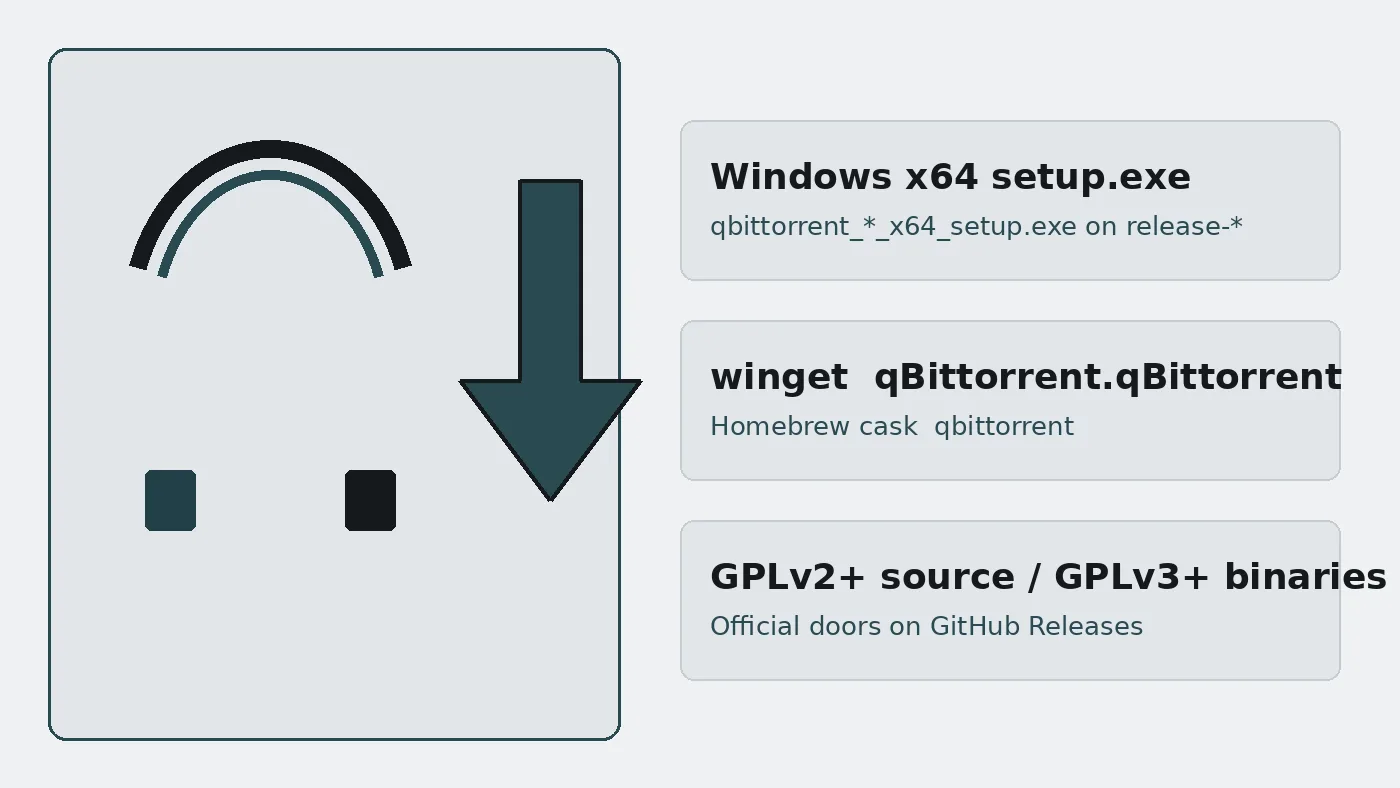
Safe downloads for qbittorrent start with named official doors. Use qbittorrent.org/download, GitHub Releases for qbittorrent/qBittorrent, winget id qBittorrent.qBittorrent, or Homebrew cask qbittorrent. Those publish the real setup, dmg, and AppImage names without a surprise toolbar.
Advertising portals rank for the same search phrase and often wrap the installer. If the filename does not match GitHub, stop. Related map: releases.
Windows stranger-safe path
Prefer qbittorrent_*_x64_setup.exe from a non-prerelease release-* tag. Run it after you read the SmartScreen publisher details. Winget is fine when App Installer is present and your fleet already trusts that catalog.
Confirm App Installer from Microsoft if winget is missing, then retry the same id. Helper: how to install winget. Windows walkthrough: Windows install.
Never run a “qbittorrent setup” that arrived as a random .zip.exe from a forum signature. Match the GitHub asset name first.
macOS and Linux doors
On macOS, brew install --cask qbittorrent is verified. The matching dmg on the same tag is the manual door when brew is blocked. Gatekeeper may ask you to open the app from System Settings after a direct dmg install.
On Linux, take the x86_64 AppImage from Releases, run chmod +x, then launch it. Distro packages can work, but they may lag the GitHub tag your runbook pins.
Signatures and lt20 builds
Release assets include .asc signatures for people who verify downloads. Everyday desks can still confirm safety by sticking to upstream URLs and matching filenames. Signature checking is extra assurance, not a reason to use a random mirror.
Builds labeled lt20 use a different libtorrent line. They are official when they sit on the same tag, but they are not the default stranger path. Take them only with intent.
What safe does not mean
A clean installer does not make every torrent legal or every peer trustworthy. BitTorrent is a protocol. Your content choices, firewall rules, and VPN policy stay separate from the install path. Safety overview: is qbittorrent safe.
The client also does not anonymise you by itself. If your threat model needs a VPN or controlled network, configure that outside the torrent window.
Checklist before you click Run
- Confirm the URL. GitHub Releases, qbittorrent.org, winget, or brew — not a lookalike domain.
- Confirm the filename. Match the asset on the current stable tag.
- Skip prerelease when you want stable. Beta tags are labeled as such for a reason.
- Prove one transfer after install. A magnet or .torrent row beats assuming success.
- Keep one update door. Document winget, brew, or Releases for the next bump.
Pillar: qbittorrent home. Repo map: GitHub.
Operational detail for shared desks
Shared desks drift when every volunteer picks a different mirror. Print the GitHub Releases URL, the winget id the client.the client, and the Homebrew cask the client on the same lab card. After each reimage, prove one magnet or torrent add before you hand the machine back.
Travel laptops should carry the filename you installed and the update door you trust.
Prefer returning to the documented door even when search ads shout louder than the official project name.
Helpdesk tickets move faster when they include the OS build, the asset name or package id, and whether a VPN changed during the incident.
Vague torrent-is-broken notes waste mornings. Ask for a screenshot of the transfer list and the Downloads path in Options.
Classroom images should freeze only after a reboot test. Antivirus first scans and login scripts hide problems that a same-session demo misses. Keep a second BitTorrent client only if your policy truly needs it.
When you retire a machine, uninstall the client and remove extra incomplete folders that still hold private packs. Document retention rules separately from the install guide.
Back to the pillar for the live install panel: qbittorrent home. Guides hub: guides.
Quiet checklist for the next image
- Pin the Releases URL and package ids on the lab card.
- Prove one magnet or torrent add after every reimage.
- Keep adware mirrors off the bookmark bar.
- Record whether winget, brew, or a manual asset was used.
- Reboot once before you call the desk ready.
- Trainers rehearse the prove step on a small trusted torrent.
- Helpdesks ask for the filename and the Downloads path before they escalate.
- Travel kits carry the same notes on paper when Store access is flaky.
When a machine retires, uninstall the client and clear incomplete folders that still hold private packs according to your retention rules. Keep signature verification optional for threat models that require it, using the detached asc files on the same tag.
Prefer the newest non-prerelease release tag that publishes the Windows x64 setup. Beta lines stay out of golden images.